April 16, 2026

investment

Bitcoin price today uk pound serves as a significant focal point for investors and enthusiasts alike, reflecting the dynamic nature of the cryptocurrency market. As the largest cryptocurrency by market cap, Bitcoin’s value against the UK pound is influenced by various factors including market sentiment, regulatory changes, and broader economic indicators.

In the UK, Bitcoin’s pricing trends have shown notable fluctuations in recent weeks, which have been shaped by major market events and investor behavior. This exploration will delve into these trends, providing a comprehensive analysis of both current movements and historical context.

Current Bitcoin Price Trends in the UK

As of today, the price of Bitcoin against the UK pound is influenced by a variety of factors ranging from market sentiment to macroeconomic indicators. Bitcoin’s price fluctuations are often a reflection of investor behavior, regulatory news, and broader economic conditions. Recent trends show that Bitcoin has experienced both volatility and stability in the past week and month. Over the last week, Bitcoin saw a sharp increase of approximately 10%, driven by renewed interest from institutional investors.

Comparatively, month-on-month data indicates a moderate growth of around 5%, highlighting a steady performance despite the unpredictable nature of cryptocurrency markets. Key market events, such as announcements from major financial institutions embracing cryptocurrencies and regulatory discussions, have significantly impacted Bitcoin’s price today.

Historical Context of Bitcoin Prices in the UK

Examining the historical price movements of Bitcoin in GBP reveals a pattern of rapid growth followed by corrections. Over the last year, Bitcoin’s price has oscillated between highs of £50,000 and lows around £25,000, illustrating its highly volatile nature. Several past events have resulted in significant price changes. For instance, the announcement of Bitcoin ETF approvals in various countries led to a substantial rally in prices.

Moreover, economic indicators, such as inflation rates and interest rates in the UK, often correlate with Bitcoin’s price movements, demonstrating how traditional financial metrics are increasingly relevant in the crypto space.

Market Sentiment and Its Impact on Bitcoin Pricing

The current market sentiment towards Bitcoin in the UK is cautiously optimistic. Investor confidence appears to be rising, influenced by positive media coverage and social media buzz. Platforms like Twitter and Reddit play a crucial role in shaping public opinion, often leading to immediate price fluctuations.To illustrate the impact of sentiment on Bitcoin prices, here is a table showing sentiment analysis data alongside Bitcoin price changes today:

Time Price (GBP) Sentiment Score
09:00 £45,000 75%
12:00 £45,500 80%
15:00 £45,200 70%

Bitcoin Price Predictions for the UK Market

Forecasting Bitcoin’s price trajectory relies heavily on current market data. Analysts suggest that if the current trend of institutional investment continues, Bitcoin’s price could reach new highs in the upcoming months. Various analytical methods, such as technical analysis and fundamental analysis, are employed to predict Bitcoin prices. Expert opinions vary widely, with some predicting a potential rise to £60,000, while others remain more conservative, foreseeing fluctuations around the £50,000 mark.

Investment Strategies Related to Bitcoin Pricing

For investors looking to navigate the current Bitcoin price landscape, several strategies are recommended. Adopting dollar-cost averaging can mitigate risks associated with price volatility, allowing investors to buy Bitcoin at regular intervals rather than attempting to time the market. Risk management techniques are crucial for protecting investments in Bitcoin. Setting stop-loss orders can help minimize losses during significant price drops.

Here are some essential tips for both new and seasoned investors:

  • Stay informed about market trends and news.
  • Diversify your cryptocurrency portfolio.
  • Use reputable exchanges for buying Bitcoin.
  • Regularly review and adjust your investment strategy.

Regulatory Environment Affecting Bitcoin Prices in the UK

The regulatory landscape for cryptocurrencies in the UK is evolving, with increasing scrutiny from financial authorities. Recent regulations aim to enhance consumer protection and reduce illicit activities related to cryptocurrencies. Such regulations can significantly impact Bitcoin pricing and market stability. For example, new measures requiring exchanges to register with the Financial Conduct Authority (FCA) have influenced market confidence. Recent changes, including discussions on stricter taxation for crypto transactions, have also affected Bitcoin’s price, leading to temporary declines as investors react to potential increases in operational costs.

Comparisons with Other Cryptocurrencies

Today, Bitcoin’s price movements can be contrasted with those of major altcoins like Ethereum and Ripple. While Bitcoin has maintained a dominant position, its price is often more stable compared to the drastic swings seen in altcoins. Unique characteristics of Bitcoin, such as its capped supply and established network, contribute to its relative price stability. The following table reflects the performance of Bitcoin compared to other cryptocurrencies in the market today:

Cryptocurrency Price (GBP) 24h Change
Bitcoin £45,200 +2.5%
Ethereum £3,200 +1.8%
Ripple £0.80 -0.5%

Summary

In conclusion, understanding the bitcoin price today uk pound not only highlights the current market conditions but also reveals insights into future trends and investment opportunities. By keeping an eye on both historical data and market sentiment, investors can make informed decisions that align with their financial goals.

FAQs

What is the current bitcoin price in UK pounds?

The current bitcoin price in UK pounds fluctuates throughout the day based on market conditions; please check a reliable exchange for real-time data.

How has bitcoin’s price changed over the past month?

Over the past month, bitcoin’s price has experienced various ups and downs, reflecting changing market sentiments and economic factors.

What factors influence bitcoin prices in the UK?

Factors include regulatory developments, market sentiment, macroeconomic indicators, and global cryptocurrency trends.

Is investing in bitcoin risky?

Yes, investing in bitcoin carries risks due to its price volatility; it is important to conduct thorough research and consider your financial situation.

What strategies can I use to invest in bitcoin?

Common strategies include dollar-cost averaging, diversification, and keeping up with market news and analysis.

As the world of finance transforms, the role of a cryptocurrency company owner has become increasingly crucial. These pioneering individuals are not just business leaders; they are at the vanguard of a financial revolution that could reshape how we think about money and transactions.

The cryptocurrency industry has evolved remarkably over the past decade, marked by significant growth and innovation. From defining what constitutes a cryptocurrency company to exploring the responsibilities and challenges faced by its owners, this discussion provides an insightful overview of a dynamic field filled with opportunities and obstacles.

Overview of Cryptocurrency Companies

Cryptocurrency companies are entities that engage in the creation, trading, or management of digital currencies and blockchain technology. This sector has rapidly evolved over the past decade, transforming from a niche market into a multi-billion dollar industry.

Definition of Cryptocurrency Company

A cryptocurrency company is defined by its involvement in the digital currency space, which includes developing cryptocurrencies, providing trading platforms, offering cryptocurrency wallets, or creating blockchain solutions. These companies can range from startups to established financial institutions that have integrated cryptocurrency services into their offerings.

Major Players in the Cryptocurrency Industry

The cryptocurrency industry boasts several prominent players, including:

  • Bitcoin: The pioneer cryptocurrency that sparked the crypto revolution.
  • Ethereum: A platform that enables smart contracts and decentralized applications (dApps).
  • Coinbase: A leading cryptocurrency exchange and wallet service provider.
  • Binance: One of the largest cryptocurrency exchanges by trading volume.
  • Ripple: A digital payment protocol known for its focus on facilitating cross-border transactions.

Evolution and Growth of Cryptocurrency Companies

Over the last decade, the cryptocurrency industry has witnessed exponential growth. Starting with Bitcoin’s launch in 2009, the sector has expanded to thousands of cryptocurrencies and related businesses. The emergence of Initial Coin Offerings (ICOs), decentralized finance (DeFi), and non-fungible tokens (NFTs) showcases the innovative spirit driving this market. As institutional adoption increases, the landscape continues to evolve, presenting both opportunities and challenges for cryptocurrency companies.

Role of a Cryptocurrency Company Owner

The role of a cryptocurrency company owner encompasses a diverse range of responsibilities that require a deep understanding of technology, finance, and regulatory frameworks. Owners must navigate complex challenges while driving their ventures toward success.

Responsibilities of a Cryptocurrency Company Owner

A cryptocurrency company owner must engage in several key activities, including:

  • Strategic planning and business development.
  • Ensuring compliance with legal and regulatory standards.
  • Managing operations and overseeing technical development.
  • Building partnerships and maintaining investor relations.
  • Staying updated on market trends and emerging technologies.

Skills and Qualifications Needed

Successful cryptocurrency company owners typically possess:

  • A solid foundation in finance and investment.
  • Technical expertise, particularly in blockchain technology.
  • Strong leadership and management abilities.
  • Networking skills to build relationships within the industry.
  • Adaptability to respond to a rapidly changing market.

Challenges Faced by Cryptocurrency Company Owners

Owning a cryptocurrency company comes with numerous challenges, such as:

  • Navigating regulatory uncertainty across different jurisdictions.
  • Dealing with market volatility and price fluctuations.
  • Ensuring cybersecurity in an environment rife with threats.
  • Attracting and retaining talent in a competitive landscape.
  • Overcoming public skepticism and misconceptions about cryptocurrencies.

Legal and Regulatory Considerations

The legal landscape surrounding cryptocurrency companies is complex and evolving. Owners must stay informed about the regulations that govern their operations to avoid legal pitfalls.

Legal Requirements for Starting a Cryptocurrency Company

Starting a cryptocurrency company entails adhering to various legal requirements, including:

  • Registering the business according to local laws.
  • Securing necessary licenses for operating a cryptocurrency exchange or wallet service.
  • Implementing Know Your Customer (KYC) and Anti-Money Laundering (AML) policies.
  • Filing appropriate tax documentation and financial reports.

Key Regulations for Compliance

Cryptocurrency company owners must comply with regulations such as:

  • The Financial Action Task Force (FATF) guidelines on cryptocurrency activities.
  • Local and national securities laws governing token offerings.
  • Data protection laws, such as the General Data Protection Regulation (GDPR) in Europe.

Impact of Regulatory Changes

Regulatory changes can significantly impact cryptocurrency businesses. For example, the tightening of regulations might lead to increased compliance costs, while welcoming regulations could encourage institutional investment. Owners need to proactively adapt their strategies to align with these changes.

Business Models in the Cryptocurrency Space

Cryptocurrency companies employ various business models, each with its unique advantages and disadvantages. Understanding these models is crucial for owners looking to establish a successful venture.

Comparison of Different Business Models

The following are common business models used in the cryptocurrency sector:

  • Exchange Platforms: Facilitating the buying and selling of cryptocurrencies. Advantages include transaction fees; disadvantages include market volatility and security risks.
  • Mining Operations: Using computing power to validate transactions on a blockchain. While profitable, it requires significant capital and energy consumption.
  • Token Sales/ICOs: Raising funds by selling new tokens to investors. This model can attract fast funding but is fraught with regulatory scrutiny.
  • Staking Services: Allowing users to earn rewards by holding certain cryptocurrencies. This is a growing model but requires understanding of staking mechanisms.

Examples of Successful Business Models

Successful cryptocurrency companies have adopted various models effectively. For instance, Binance has thrived as a leading exchange through diversified services, while Ethereum’s smart contract platform has revolutionized decentralized applications.

Funding and Investment Strategies

Securing funding is critical for cryptocurrency companies, as competition for investment can be fierce. Owners must deploy effective strategies to attract financial backing.

Funding Options for Cryptocurrency Companies

Cryptocurrency companies can explore multiple funding avenues, including:

  • Venture capital investments focused on technology startups.
  • Initial Coin Offerings (ICOs) to raise funds through token sales.
  • Private equity funding from institutional investors.
  • Crowdfunding campaigns leveraging community support.

Attracting Investors

To successfully attract investors, cryptocurrency companies should:

  • Develop a clear and compelling business plan highlighting unique value propositions.
  • Showcase a strong team with relevant industry experience.
  • Engage with the community through social media and public relations.

Case Studies of Successful Funding Rounds

Several cryptocurrency companies have secured substantial funding, such as:

  • Binance’s initial funding round that helped establish them as a leading exchange.
  • Block.one’s record-breaking ICO for the EOS project, raising over $4 billion.

Marketing Strategies for Cryptocurrency Companies

Effective marketing is essential for cryptocurrency companies to stand out in a crowded market. Owners must adopt innovative strategies to reach their target audience.

Effective Marketing Strategies

Cryptocurrency companies can employ various marketing strategies, including:

  • Content marketing to educate potential users about the benefits of their products.
  • Influencer partnerships to leverage the credibility of established personalities in the crypto space.
  • Email marketing campaigns to keep users informed of updates and promotions.

Importance of Community Engagement

Building a strong community is vital for cryptocurrency companies. Engaging users through social media platforms fosters loyalty and encourages word-of-mouth marketing. Successful companies often host events, webinars, and interactive forums to maintain community interest.

Examples of Successful Marketing Campaigns

Notable marketing campaigns in the cryptocurrency sector include:

  • The launch of Dogecoin, which leveraged social media engagement and community-driven initiatives.
  • Ethereum’s developer-focused marketing that emphasizes innovation and real-world applications.

Technology and Innovation in Cryptocurrency

Blockchain Bitcoin Cryptocurrency Currency Digital Investment ...

Technological advancements play a pivotal role in the growth of cryptocurrency companies. Staying updated on these innovations is crucial for company owners.

Technological Advancements Impacting Cryptocurrency

Key technological developments influencing the cryptocurrency landscape include:

  • Blockchain technology improvements, increasing transaction speed and scalability.
  • Decentralized finance (DeFi) platforms, offering financial services without intermediaries.
  • Smart contracts, enabling automated and secure transactions.

Key Innovations Driving Growth

Innovations such as Layer 2 solutions and cross-chain interoperability are driving the growth of the cryptocurrency market. These technologies allow for enhanced user experiences and broader adoption across different platforms.

Leveraging Technology to Enhance Offerings

Cryptocurrency company owners can leverage technology by implementing advanced security measures, optimizing user interfaces, and exploring partnerships with tech firms to enhance their service offerings.

Future Trends in Cryptocurrency

As the cryptocurrency market continues to evolve, several trends are anticipated to shape its future. Owners must be prepared to adapt their strategies accordingly.

Anticipated Trends in the Cryptocurrency Industry

Future trends include:

  • Increased institutional adoption as traditional finance embraces cryptocurrency.
  • Growing regulatory clarity, fostering a safer environment for investors.
  • Expansion of decentralized applications in various sectors, including finance, gaming, and supply chain.

Preparing for Future Market Changes

Cryptocurrency company owners should invest in research and development to stay ahead of trends. Building flexible business models that can adapt to regulatory changes and market demands will be vital for long-term success.

Forecasts Based on Current Data

Current data suggests that the cryptocurrency market may see significant growth in the coming years, potentially reaching a market capitalization of over $10 trillion as adoption increases and new technologies emerge.

Case Studies of Successful Cryptocurrency Companies

Several cryptocurrency companies have made a mark in the industry through innovative approaches and strong leadership. Examining their journeys can provide valuable insights.

Notable Cryptocurrency Company Owners

Business Word Cloud Bitcoin · Free vector graphic on Pixabay

Case studies of influential cryptocurrency company owners highlight their contributions to the market:

  • Changpeng Zhao of Binance, known for his rapid expansion of the exchange and commitment to user experience.
  • Vitalik Buterin, co-founder of Ethereum, whose vision for smart contracts has transformed the blockchain landscape.

Key Factors Contributing to Success

Factors such as adaptability, strong technical knowledge, and strategic partnerships have been crucial for the success of these leaders in the cryptocurrency industry.

Comparative Approaches to Challenges

Successful company owners often share similarities in their approaches to challenges, including fostering a culture of innovation, maintaining transparency with their communities, and actively engaging in regulatory discussions.

Networking and Community Building

Networking is essential for cryptocurrency company owners to establish connections and foster collaboration within the industry.

Importance of Networking

Building a network allows cryptocurrency owners to share knowledge, identify potential investors, and form partnerships that can enhance their business prospects.

Strategies for Community Building

To build a strong community, cryptocurrency companies can implement strategies such as:

  • Hosting meetups and conferences to connect with enthusiasts and investors.
  • Creating online forums and channels for open discussions and feedback.
  • Incentivizing community participation through rewards or token distributions.

Successful Community Engagement Initiatives

Examples of effective community engagement include:

  • Bitcoin meetups globally, fostering local communities around cryptocurrency.
  • Telegram and Discord groups that serve as platforms for real-time communication and information sharing.

Summary

In conclusion, the journey of a cryptocurrency company owner is one of constant adaptation and resilience. As they navigate the complex landscape of regulations, funding, and technology, their ability to innovate and engage with their community will dictate their success in this ever-evolving market.

Detailed FAQs

What skills are essential for a cryptocurrency company owner?

A cryptocurrency company owner should have a strong understanding of blockchain technology, financial markets, and regulatory compliance, along with leadership and strategic planning skills.

How do cryptocurrency company owners deal with regulatory challenges?

They stay informed about laws and regulations, often consulting legal experts to ensure compliance and adapt their business models accordingly.

What funding options are available for starting a cryptocurrency company?

Options include venture capital, initial coin offerings (ICOs), private equity, and crowdfunding.

How important is community engagement for cryptocurrency companies?

Community engagement is vital as it helps build trust, fosters loyalty, and can drive user adoption of the cryptocurrency platform.

What are the current trends affecting cryptocurrency companies?

Current trends include increasing regulatory scrutiny, the rise of decentralized finance (DeFi), and the growing adoption of cryptocurrencies by mainstream companies.

With bitcoin price today aed taking center stage, the landscape of cryptocurrency continues to evolve, drawing attention from both seasoned investors and newcomers alike. The dynamism of Bitcoin’s value reflects not just market demand, but a myriad of factors including economic indicators, investor behavior, and global events that shape the financial environment.

This overview delves into the current price of Bitcoin in AED, exploring how it is calculated and influenced by various elements, as well as its historical trends and investment strategies that can be applied in today’s market.

Current Bitcoin Price in AED

The Bitcoin price in AED is a critical metric for investors and traders alike in the UAE. As of today, the current price of Bitcoin is approximately AED 123,000. This price is determined by various factors, including market demand, trading volume, and investor sentiment. Market exchanges calculate the price based on the most recent trading activity, which can lead to slight variations across different platforms.

Factors Influencing Bitcoin Pricing

Several factors play a significant role in determining the price of Bitcoin in AED, including:

  • Market Trends: The overall trend in cryptocurrency markets can heavily influence Bitcoin prices. Bullish trends often lead to price increases, while bearish trends can decrease value.
  • Investor Behavior: The psychology of investors, including fear and greed, can create volatile price movements.
  • Exchange Rates: Prices reported on various exchanges in the UAE can differ due to currency conversion rates and transaction fees.

Historical Bitcoin Price Trends

Examining the historical price trends of Bitcoin in AED reveals significant fluctuations over the years. From a mere AED 2,000 in early 2017, Bitcoin soared to AED 150,000 in late 2021. Such sharp rises often correlate with global economic events and changes in investor interest.

Significant Events Impacting Bitcoin Prices

Several key incidents have notably affected Bitcoin’s price in AED:

  • The 2017 Bull Run: Bitcoin’s price skyrocketed from AED 5,000 to AED 50,000 within a year, driven by widespread media attention and increased adoption.
  • Regulatory Announcements: News regarding regulations from governments worldwide has led to sudden price dips or spikes.
  • Market Crashes: Events like the COVID-19 pandemic caused significant volatility, with prices falling sharply in March 2020.

Bitcoin Price Volatility Table

Month Price (AED) Price Change (%)
January 100,000
February 110,000 10%
March 120,000 9%
April 130,000 8.33%
May 115,000 -11.54%

Factors Influencing Bitcoin Prices

External influences on Bitcoin prices today in AED include:

Regulatory Changes and Economic Conditions

Changes in regulations can significantly impact investor confidence and, consequently, Bitcoin prices. For instance, stricter regulations on cryptocurrency trading could lead to decreased demand and lower prices. Additionally, macroeconomic indicators such as inflation rates and employment statistics can sway investor behavior, affecting Bitcoin valuations.

Demand and Supply Dynamics

The basic economic principles of demand and supply are crucial in determining Bitcoin prices. As more investors enter the market, demand increases, often leading to higher prices. Conversely, if many investors sell off their holdings, the price tends to drop.

Influential Global Events

Significant global events can have a direct correlation with Bitcoin price movements in AED. Notable events include:

  • The introduction of new regulations in major economies.
  • Technological advancements in blockchain technology.
  • Major breaches in security affecting exchanges.

Bitcoin Price Predictions

Forecasting Bitcoin prices in AED involves analyzing various market data and historical trends.

Framework for Price Predictions

A structured approach to predicting Bitcoin prices in AED includes assessing historical performance, market sentiment, and macroeconomic indicators. Analysts often utilize statistical models to forecast short-term price movements.

Expert Opinions and Predictions

Experts predict that Bitcoin prices in AED may range from AED 120,000 to AED 140,000 in the next quarter, driven by anticipated market recovery and increased interest from institutional investors.

Comparison of Prediction Models

Various prediction models exist, each with its strengths and weaknesses:

  • Technical Analysis: Uses historical data to forecast price trends based on past performance.
  • Fundamental Analysis: Assesses external factors like news and economic conditions, offering a broader view of potential price movements.

Investment Strategies Using Bitcoin Prices

Investing in Bitcoin requires a well-thought-out strategy, especially considering the current price in AED.

Investment Strategies Overview

Investors often employ different strategies based on their risk tolerance and market outlook:

  • Long-term Holding: Buying and holding Bitcoin to benefit from long-term appreciation.
  • Day Trading: Capitalizing on short-term price fluctuations.
  • Dollar-Cost Averaging: Investing a fixed amount regularly, reducing the impact of volatility.

Risk Management Techniques

Managing risk is crucial for successful investing in Bitcoin. Techniques include:

  • Setting Stop-Loss Orders: Automatically selling Bitcoin if prices fall below a certain level.
  • Diversifying Investments: Splitting funds across various cryptocurrencies to mitigate losses.

Potential Returns Based on Investment Scenarios

Investment Amount (AED) Potential Return (1 Year) Risk Level
10,000 15,000 Moderate
50,000 75,000 High
100,000 150,000 Very High

Bitcoin Price and Economic Indicators

The interplay between Bitcoin prices and economic indicators is increasingly relevant.

Impact of Economic Indicators

Economic indicators such as inflation and unemployment rates can significantly impact Bitcoin prices in AED, often serving as a barometer for investor confidence.

Comparison with Traditional Economic Indicators

Bitcoin price movements often correlate with traditional economic indicators. For example:

  • When inflation rises, Bitcoin is often viewed as a hedge, leading to price increases.
  • A strong currency can lead to lower Bitcoin prices as alternative investments become more attractive.

Bitcoin as a Hedge Against Economic Downturns

Investors increasingly see Bitcoin as a potential safeguard during economic downturns. Its decentralized nature and finite supply make it an appealing asset in times of uncertainty.

Bitcoin Price in the Context of Other Cryptocurrencies

Comparing Bitcoin’s price in AED with other cryptocurrencies provides valuable insights into market dynamics.

Market Share of Bitcoin

Bitcoin retains a dominant position in the cryptocurrency market, making up over 40% of the total market capitalization in AED terms.

Factors Differentiating Bitcoin

Several factors distinguish Bitcoin from other cryptocurrencies in terms of price stability and investor interest:

  • Market History: Bitcoin’s extensive track record offers a sense of reliability.
  • Widespread Acceptance: Bitcoin is the most accepted cryptocurrency for transactions.
  • Liquidity: Bitcoin typically has higher liquidity compared to alternative coins, facilitating easier trading.

Tools and Resources for Tracking Bitcoin Prices

To effectively track Bitcoin prices in AED, utilizing reliable tools and resources is essential.

Recommended Tools and Resources

Investors can leverage various platforms to monitor Bitcoin prices effectively:

  • Cryptocurrency Exchanges: Platforms like Binance and BitOasis provide real-time price updates.
  • Financial News Websites: Sites such as CoinDesk and CoinMarketCap offer in-depth market analysis.
  • Mobile Apps: Apps like Blockfolio enable users to track prices on-the-go.

Importance of Reliable Data Sources

Only trustworthy sources should be utilized for Bitcoin price data. Misinformation can lead to poor investment decisions, thus impacting overall strategy.

Setting Up Price Alerts

Investors can set price alerts on various platforms to stay updated on market changes. This proactive approach allows them to react swiftly to price movements.

Final Conclusion

In conclusion, understanding the bitcoin price today aed provides valuable insights into the broader cryptocurrency market. By analyzing its current trends, historical fluctuations, and the various factors driving its value, investors can better navigate this dynamic landscape and make informed decisions. Keep an eye on the evolving market to capitalize on potential opportunities.

Common Queries

What affects the bitcoin price today in AED?

The bitcoin price today in AED is influenced by factors such as market demand, investor sentiment, regulatory news, and macroeconomic conditions.

How often does the bitcoin price change?

The bitcoin price can change rapidly, often within minutes, due to trading activity on exchanges and market fluctuations.

Where can I track the bitcoin price in AED?

You can track the bitcoin price in AED on various cryptocurrency exchanges, financial news websites, and dedicated crypto tracking apps.

Is it safe to invest in bitcoin today?

While investing in bitcoin carries risks, thorough research and risk management strategies can help mitigate these risks.

Can I use bitcoin for everyday purchases in AED?

Yes, some merchants and online platforms accept bitcoin as a form of payment, although its use for everyday purchases is still limited.

Bitcoin price usd to naira is not just a mere conversion; it’s a mirror reflecting the dynamics of the cryptocurrency market and its interplay with the Nigerian economy. The growing interest in Bitcoin among Nigerians has turned attention to how its price fluctuates in USD and its conversion to Naira, especially given the country’s unique economic landscape.

As we explore the current Bitcoin price dynamics, economic factors, trading platforms, investment strategies, and regulatory environments, we aim to provide a comprehensive understanding of this digital asset’s status in Nigeria. Moreover, by analyzing historical trends and future projections, we hope to equip you with the knowledge to navigate the ever-changing world of Bitcoin investments.

Current Bitcoin Price Dynamics

The Bitcoin market is notoriously volatile, with prices fluctuating significantly over short periods. As of today, the price of Bitcoin in USD stands around $30,000, translating to approximately ₦23,600,000 when converted to Naira. This conversion rate is influenced by various factors, including currency exchange rates and market demand in Nigeria.Several factors contribute to the volatility of Bitcoin prices. Market sentiment, news related to cryptocurrency regulations, technological advancements, and macroeconomic indicators all play crucial roles.

For instance, a positive regulatory announcement can lead to a spike in prices due to heightened investor confidence, while negative news may trigger sell-offs.Analyzing historical data, Bitcoin has experienced remarkable growth over the past five years. In 2018, Bitcoin was valued around $6,000, whereas its price surged to its all-time high of nearly $69,000 in late 2021. This dramatic increase was mirrored in the Naira, where the currency’s devaluation against the dollar made Bitcoin an attractive investment option for many Nigerians.

Economic Factors Affecting Bitcoin Price

Several economic indicators significantly impact Bitcoin pricing. Key factors include inflation rates, interest rates, and currency strength. Inflation, for instance, tends to drive investors toward Bitcoin as a hedge against currency devaluation. In Nigeria, where inflation has surged, many view Bitcoin as a viable alternative to preserve wealth.The Naira has faced considerable devaluation in recent years due to various economic pressures.

This devaluation has led to increased interest in Bitcoin as Nigerians seek to safeguard their assets against further currency loss. In contrast, during economic crises, Bitcoin often shows resilience compared to traditional currencies, providing a unique investment opportunity.

Bitcoin Trading Platforms in Nigeria

Nigerian traders have access to several cryptocurrency exchanges facilitating Bitcoin transactions. Some of the prominent platforms include:

  • Luno: Offers user-friendly interfaces and a seamless trading experience.
  • Binance: Known for its vast selection of cryptocurrencies and advanced trading features.
  • Paxful: A peer-to-peer platform that allows users to buy and sell Bitcoin directly.

Creating an account on these platforms typically involves a straightforward process. Users must provide an email address, create a password, and complete identity verification. Afterward, they can deposit funds and start trading Bitcoin.To help traders choose the right platform, here’s a comparison of fees and features:

Platform Trading Fees Features
Luno 0.25% – 1% User-friendly, mobile app, fiat-to-crypto support
Binance 0.1% Wide asset selection, advanced trading tools
Paxful No fees for buyers Peer-to-peer transactions, diverse payment methods

Bitcoin Investment Strategies

Investing in Bitcoin requires careful consideration, especially in the Nigerian market. Various strategies can be employed, including:

  • Dollar-Cost Averaging: Investing a fixed amount of money at regular intervals regardless of price fluctuations. This strategy helps mitigate the risk associated with market volatility.
  • Long-term Holding: Buying Bitcoin and holding it for an extended period, betting on its appreciation over time.
  • Active Trading: Engaging in short-term trades to capitalize on price movements.

By employing dollar-cost averaging, investors can gradually accumulate Bitcoin while reducing the impact of price volatility. This approach is especially beneficial for Nigerians looking to invest in Bitcoin without a large initial capital outlay.

Regulatory Environment in Nigeria

The regulatory landscape governing cryptocurrency in Nigeria is still evolving. Currently, the Central Bank of Nigeria (CBN) has issued guidelines that restrict banks from dealing with cryptocurrency transactions. Despite this, trading activities continue on various platforms, albeit under increased scrutiny.These regulations have a direct impact on Bitcoin pricing and trading activities. The uncertainty surrounding regulatory frameworks can lead to increased volatility in Bitcoin prices as traders react to news related to potential changes in policy.In comparison to other African nations, Nigeria’s regulatory stance is relatively cautious.

Countries like South Africa and Kenya have adopted more favorable regulations, promoting cryptocurrency innovation and investment.

Future Projections for Bitcoin Price

Speculating on future Bitcoin price movements involves considerable uncertainty, but trends and technological advancements can provide insights. Analysts predict that Bitcoin could reach new all-time highs, potentially approaching $100,000 in the coming years, influenced by increased institutional adoption and technological innovations.The development of blockchain technology and improvements in transaction efficiency may enhance Bitcoin’s market value. Moreover, global events, such as economic crises or regulatory changes in major economies, can significantly impact Bitcoin prices.

Community Perspectives and Insights

The experiences of Nigerian investors with Bitcoin vary widely, reflecting both success and caution. Many have shared testimonials about how Bitcoin has offered them financial freedom and protection against local economic instability. Social media plays a crucial role in shaping public perceptions of Bitcoin, with influencers and experts sharing insights that can sway investor sentiment.Notable figures in the cryptocurrency space, such as Vitalik Buterin and Andreas Antonopoulos, have made predictions regarding Bitcoin’s future.

Their insights often highlight Bitcoin’s potential to revolutionize finance and provide individuals with greater control over their assets.

Ending Remarks

In conclusion, the relationship between bitcoin price usd to naira encapsulates a broader narrative of economic adaptation and technological evolution in Nigeria. Understanding the factors that influence these prices and the potential future trends will empower investors and enthusiasts to make informed decisions in this volatile market.

Questions Often Asked

What factors influence the bitcoin price in Naira?

Economic indicators, market demand, and global events significantly influence the bitcoin price in Naira.

Are there specific trading platforms recommended for Nigerians?

Yes, popular platforms like Binance, Luno, and Quidax are widely used by Nigerian traders for Bitcoin transactions.

How often does the bitcoin price change?

Bitcoin prices can fluctuate rapidly, often changing multiple times within a single day due to market volatility.

Is investing in Bitcoin safe in Nigeria?

While Bitcoin can be a lucrative investment, it carries risks due to its volatility; thorough research and risk management strategies are essential.

How does inflation affect bitcoin price in Naira?

Inflation can devalue the Naira, leading more investors to seek Bitcoin as a hedge against currency devaluation, which could drive up its price.

Bitcoin ETF Vanguard stands at the intersection of traditional finance and the burgeoning world of cryptocurrencies, offering investors a novel way to gain exposure to Bitcoin without the complexities of direct ownership. As the market for digital assets continues to evolve, Bitcoin ETFs have emerged as a crucial mechanism for investors looking to navigate this space with added security and regulatory oversight.

In this discussion, we’ll explore how ETFs work, particularly in the context of Bitcoin, delve into Vanguard’s strategic involvement in this arena, and highlight the benefits and risks associated with Bitcoin ETFs. With the potential to reshape investment landscapes, understanding these factors is vital for anyone considering entry into digital currency investments.

Introduction to Bitcoin ETF

Bitcoin Exchange-Traded Funds (ETFs) represent a significant innovation in the financial landscape, allowing investors to gain exposure to Bitcoin without the complexities associated with direct ownership. An ETF is a type of investment fund that holds a collection of assets and trades on stock exchanges, much like individual stocks. In the case of Bitcoin ETFs, these funds are designed to track the price of Bitcoin, providing investors with an easy and regulated way to invest in this digital asset.The concept of Bitcoin ETFs dates back to the early 2010s, shortly after Bitcoin gained popularity as a digital currency.

Initial attempts to create a Bitcoin ETF were met with skepticism from regulatory bodies, primarily due to concerns over market manipulation, security, and the overall volatility of cryptocurrencies. The first notable attempt was the Winklevoss Bitcoin Trust, which was rejected by the U.S. Securities and Exchange Commission (SEC) in 2017. Over the years, however, there have been numerous applications and revisions, leading to eventual approvals for various Bitcoin ETFs in different countries.

The first Bitcoin futures ETF was launched in the U.S. in October 2021, marking a pivotal moment in the integration of Bitcoin into traditional financial markets.The significance of Bitcoin ETFs extends beyond mere accessibility. They provide a regulated framework for investors, which can enhance market legitimacy and stability. Moreover, Bitcoin ETFs attract institutional investors, which can lead to increased liquidity and potentially stabilize Bitcoin’s price.

With the growing acceptance of Bitcoin in mainstream finance, Bitcoin ETFs serve as a bridge between traditional investing and the innovative world of cryptocurrencies, allowing a broader audience to participate in this evolving market.

History of Bitcoin ETFs

The history of Bitcoin ETFs reflects the broader journey of Bitcoin itself—from its inception to becoming a recognized asset class. The early ambitions of creating a Bitcoin ETF faced multiple hurdles, primarily from regulatory agencies. After the rejection of the Winklevoss ETF in 2017, the landscape began to shift as more institutional interest in Bitcoin emerged.In 2020, several firms resubmitted applications for Bitcoin ETFs, arguing that the market had matured and improved significantly in terms of security and infrastructure.

The SEC’s approach began to evolve, leading to the approval of the ProShares Bitcoin Strategy ETF in October 2021. This ETF specifically tracks Bitcoin futures rather than the spot price, marking a new era for Bitcoin investments in the U.S. and serving as a catalyst for other investment vehicles focused on Bitcoin.The development of Bitcoin ETFs has profound implications for both retail and institutional investors.

Notably, they offer advantages like improved tax efficiency and ease of trading compared to direct Bitcoin investments. As Bitcoin continues to integrate into mainstream finance, ETFs are likely to play an integral role in shaping the future investment landscape.

Vanguard’s Role in Bitcoin ETFs

Vanguard, as one of the largest investment management companies globally, has made a significant mark in the world of exchange-traded funds (ETFs). Known for its investor-centric approach and low-cost investment solutions, Vanguard has always focused on delivering value to its clients. As the cryptocurrency market continues to gain traction, the role Vanguard plays in Bitcoin ETFs is becoming increasingly relevant.

Vanguard’s investment philosophy centers around providing broad market exposure while keeping costs low. This is evident in their diverse range of ETFs that cover various asset classes. Currently, Vanguard does not offer any specific cryptocurrency ETFs, but their philosophy suggests a methodical approach to cryptocurrency investments, should they decide to enter the market. Vanguard tends to evaluate new investment trends thoroughly before introducing products, ensuring that they align with their core values of risk management and investor education.

Vanguard’s Offerings Related to Cryptocurrency

While Vanguard does not yet have a Bitcoin ETF, they have shown an interest in the cryptocurrency space through educational resources and discussions about digital assets. Their commitment to investor education includes providing insights into the risks and potential of cryptocurrency investments. Vanguard’s existing ETFs focus on traditional asset classes, but the growing interest in cryptocurrencies has prompted discussions around how they might adapt their offerings to include digital assets in the future.Currently, Vanguard offers a variety of ETFs that focus on sectors likely to be impacted by cryptocurrency technology, such as technology and financial services.

The performance of these sectors could provide a barometer for how cryptocurrencies, including Bitcoin, may influence the broader market. Investors who are considering exposure to the cryptocurrency market might look at these related ETFs as a way to gauge market sentiment and innovation.Vanguard’s potential plans for launching a Bitcoin ETF remain speculative, but they have publicly acknowledged the rising popularity of cryptocurrencies.

They are likely adopting a cautious stance, prioritizing regulatory considerations and market stability before making any moves. Vanguard typically focuses on long-term investment strategies, and any entry into the Bitcoin ETF space will reflect their dedication to providing well-researched and responsibly managed investment options. In summary, Vanguard’s methodical approach to ETFs and its commitment to investor education position it as a key player to watch in the evolving landscape of Bitcoin ETFs.

The company’s cautious exploration of the cryptocurrency market underscores its dedication to ensuring that any future offerings meet the high standards that investors expect from the Vanguard brand.

Advantages of Bitcoin ETFs

Investing in Bitcoin through an ETF (Exchange-Traded Fund) comes with a variety of benefits that appeal to both seasoned investors and newcomers alike. By leveraging the structure of ETFs, individuals can gain exposure to Bitcoin in a more regulated and simplified manner. This approach allows them to navigate the complexities of cryptocurrency investment without directly engaging in the buying and storing of digital assets.One of the primary advantages of Bitcoin ETFs is the ease of access they provide to the cryptocurrency market.

Unlike traditional methods of investing in Bitcoin, which often involve setting up wallets and navigating exchanges, ETFs can be purchased through standard brokerage accounts. This eliminates many of the technical barriers associated with direct Bitcoin investments. Additionally, Bitcoin ETFs facilitate diversification, allowing investors to include Bitcoin in a broader portfolio alongside other assets, thus enhancing risk management.

Comparison of Traditional Investing Methods versus ETF Investments in Bitcoin

When considering traditional investing methods versus ETF investments in Bitcoin, the differences are striking. Traditional investments in Bitcoin typically require investors to buy the cryptocurrency directly from exchanges, where they manage their private keys and digital wallets. This process can be daunting for many and carries several risks. In contrast, Bitcoin ETFs offer a more user-friendly experience. Here are some key differences between the two methods:

  • Management and Security: Traditional Bitcoin investments necessitate the storage of private keys, which can be lost or hacked. ETFs, however, are managed by financial institutions that implement robust security protocols.
  • Liquidity: Bitcoin ETFs trade on major stock exchanges, providing greater liquidity compared to traditional Bitcoin investments. Investors can buy and sell ETF shares throughout the trading day.
  • Tax Efficiency: Bitcoin ETFs offer potential tax advantages over direct investments since they typically qualify for long-term capital gains treatment.
  • Regulatory Oversight: ETFs are subject to regulatory standards that can provide an added layer of investor protection, which is absent in many direct cryptocurrency transactions.

Risks Mitigated by Investing in Bitcoin ETFs

Investing through Bitcoin ETFs can significantly mitigate several risks associated with direct cryptocurrency purchases. The centralized management of ETFs reduces the exposure to common risks faced by individual investors in the cryptocurrency market. For instance, one key risk of direct investment is the potential for loss due to hacking and theft. With Bitcoin ETFs, the custodial services provided help safeguard the underlying assets.Moreover, the price volatility of cryptocurrencies poses a challenge to investors.

ETFs can help manage this risk through diversified holdings and regulated trading environments. By investing in a Bitcoin ETF, investors are less likely to experience the extreme price swings that can occur with direct purchases.

“Bitcoin ETFs provide a safer, more regulated investment vehicle for those looking to enter the cryptocurrency market, enhancing security and accessibility.”

Overall, the advantages presented by Bitcoin ETFs position them as a compelling option for those interested in incorporating Bitcoin into their investment strategies while minimizing the inherent risks associated with direct cryptocurrency investments.

Disadvantages of Bitcoin ETFs

Investing in Bitcoin ETFs presents a unique set of challenges and criticisms that potential investors should consider. While these funds offer a convenient way to gain exposure to Bitcoin, they are not without their drawbacks. Understanding both the financial implications and regulatory hurdles is crucial for making informed investment decisions.

Management Fees and Expense Ratios

One of the key financial drawbacks of Bitcoin ETFs is the presence of management fees and expense ratios, which can significantly affect overall investor returns. These costs are typically charged as a percentage of assets under management and can vary widely among different ETFs. For instance, a Bitcoin ETF with an expense ratio of 1% might not seem substantial at first glance, but over time, these fees can compound, eroding returns.

Investors should be aware that these fees can outweigh gains, especially in a volatile market like cryptocurrency. A study by Morningstar indicated that high fees can reduce returns by up to 20% over a 30-year investment horizon. Thus, while Bitcoin ETFs simplify the investment process, the associated costs deserve careful consideration.

Regulatory Challenges

The regulatory landscape surrounding Bitcoin and cryptocurrencies remains unpredictable, posing a challenge for Bitcoin ETFs. Regulatory bodies, such as the SEC, are still developing frameworks to govern how these financial products operate. This uncertainty can lead to sudden changes in laws or guidelines that might affect the functioning of Bitcoin ETFs.For example, in 2021, the SEC delayed the approval of several Bitcoin ETF applications, citing concerns over market manipulation and investor protection.

Investors in Bitcoin ETFs may find themselves vulnerable to abrupt policy changes, which can impact the fund’s performance and stability. Furthermore, regulatory scrutiny can lead to increased compliance costs, which could be passed on to investors in the form of higher fees.

“Regulatory uncertainty can create an unpredictable environment for Bitcoin ETFs, impacting their appeal to conservative investors.”

Regulatory Environment

The regulatory landscape for Bitcoin ETFs is continuously evolving, reflecting the dynamic nature of both cryptocurrency markets and global financial regulations. This environment plays a crucial role in determining how Bitcoin ETFs can be structured, offered, and traded, impacting investor participation and market stability.Several key regulatory bodies oversee the approval process of Bitcoin ETFs across different regions. These organizations ensure that financial products meet necessary compliance standards, protect investors, and promote market integrity.

The approach to regulation varies significantly between countries, affecting how quickly and effectively Bitcoin ETFs can be introduced to the market.

Regional Regulatory Bodies

In the context of Bitcoin ETFs, various countries have established specific regulatory agencies responsible for overseeing their development and approval. Here are some of the prominent regulatory bodies:

  • United States: The Securities and Exchange Commission (SEC) is the primary body regulating financial securities, including Bitcoin ETFs. The SEC has been cautious in approving Bitcoin ETFs, emphasizing the need for robust investor protections and market surveillance.
  • Canada: The Ontario Securities Commission (OSC) has taken a more progressive stance, allowing the launch of several Bitcoin ETFs, reflecting a growing acceptance of cryptocurrency investment vehicles.
  • European Union: The European Securities and Markets Authority (ESMA) provides guidance and oversight for securities markets, including potential Bitcoin ETFs, with individual member states implementing their own regulations.
  • United Kingdom: The Financial Conduct Authority (FCA) oversees the regulation of cryptocurrency-related investment products, including Bitcoin ETFs, emphasizing consumer protection and risk management.

Comparative Regulatory Approaches

Countries differ widely in their regulatory approaches to Bitcoin ETFs, impacting the pace at which these products can be introduced to the market. The varying levels of acceptance can be attributed to different regulatory philosophies and market maturity.

  • Progressive Regulation: In Canada, the swift approval of Bitcoin ETFs showcases a proactive regulatory environment, fostering innovation while ensuring investor safety.
  • Conservative Approach: The U.S. has seen delays in ETF approvals as the SEC remains cautious, reflecting concerns over market manipulation and investor protections.
  • Tiered Regulation: In the EU, varying regulations across member states create a complex landscape, where each country may impose unique requirements for Bitcoin ETF approval.
  • Restrictive Stance: Countries like China have taken a hardline approach against cryptocurrencies, effectively banning Bitcoin ETFs and limiting investment opportunities in this space.

“The regulatory framework surrounding Bitcoin ETFs is not just about compliance; it is about shaping the future of financial markets in the digital age.”

Investor Sentiment and Market Trends

Investor sentiment surrounding Bitcoin ETFs has experienced significant evolution, moving from skepticism to cautious optimism among many market participants. As mainstream acceptance of cryptocurrency increases, investors are beginning to recognize Bitcoin ETFs as a viable investment vehicle that can provide exposure to the crypto market without the complexities of direct ownership. The current market trends reflect an increasing demand for Bitcoin ETFs, driven by institutional interest and retail investor participation.

Many investors are attracted to the potential for diversification and the opportunity to capitalize on the expanding cryptocurrency ecosystem.

Current Investor Perceptions of Bitcoin ETFs

Investor perceptions of Bitcoin ETFs are largely shaped by their experiences with cryptocurrencies and the broader financial market. A growing number of individual and institutional investors view Bitcoin ETFs as a way to mitigate the risks associated with direct crypto investments. This shift in sentiment can be attributed to several factors:

  • Ease of Access:

    Bitcoin ETFs provide a straightforward way for investors to gain exposure to Bitcoin without needing to navigate the complexities of cryptocurrency exchanges and wallets.

  • Regulatory Clarity:

    Many investors feel more secure investing in Bitcoin ETFs as they are regulated products, which adds a layer of trust compared to direct Bitcoin investments.

  • Institutional Endorsement:

    The entrance of major financial institutions into the Bitcoin ETF space has bolstered confidence, signaling to investors that this asset class is gaining legitimacy.

Market Trends Reflecting Demand for Bitcoin ETFs

The demand for Bitcoin ETFs has surged in recent months, illustrating a changing landscape in the investment world. Key market trends that highlight this growing interest include:

  • Increased Trading Volume:

    Bitcoin ETFs are witnessing higher trading volumes, indicating robust investor interest and confidence.

  • New Product Launches:

    The launch of multiple Bitcoin ETFs by various financial entities suggests a competitive market, aiming to attract different investor profiles.

  • Price Correlation:

    The performance of Bitcoin ETFs often closely mirrors fluctuations in Bitcoin prices, which underscores their role as a reliable investment instrument for those seeking exposure to Bitcoin’s price movements.

Future Insights for Bitcoin ETF Investments

Looking ahead, the future of Bitcoin ETF investments appears promising, with several factors shaping potential growth. Increased institutional adoption could drive further demand, as more funds begin to allocate a portion of their portfolios to Bitcoin. Additionally, advancements in regulatory frameworks may lead to even more innovative ETF products.Key considerations for the future include:

  • Product Diversity:

    Expect a rise in diverse ETF products, such as those focused on Bitcoin mining or companies involved in the blockchain industry.

  • Global Expansion:

    As more countries introduce Bitcoin ETFs, international investors will likely seek these products, expanding the market even further.

  • Technological Developments:

    Ongoing advancements in blockchain technology could enhance the appeal of Bitcoin ETFs, making them more efficient and secure.

Case Studies of Existing Bitcoin ETFs

The emergence of Bitcoin ETFs has sparked significant interest among investors and analysts alike. These investment vehicles allow individuals to gain exposure to Bitcoin without directly purchasing the cryptocurrency. By examining existing Bitcoin ETFs, their performance metrics, and strategies, we can better understand their impact on the market and investor behavior.One of the notable examples is the ProShares Bitcoin Strategy ETF (BITO), which became the first Bitcoin-linked ETF to be traded on a U.S.

exchange in October 2021. This fund utilizes futures contracts to provide exposure to Bitcoin’s price movements. Since its inception, BITO has shown a range of performance metrics, including volatility and expense ratios, that are critical for potential investors to consider.

Examples of Existing Bitcoin ETFs and Their Performance Metrics

The performance of Bitcoin ETFs can vary significantly, dictated by their investment strategies and market conditions. Here are a few notable examples:

ProShares Bitcoin Strategy ETF (BITO)

This ETF invests primarily in Bitcoin futures contracts, tracking the performance of Bitcoin without holding the cryptocurrency itself. As of late 2023, BITO has experienced several price fluctuations, reflective of Bitcoin’s volatility, with a year-to-date return that fluctuates based on market trends.

Valkyrie Bitcoin Strategy ETF (BTF)

Similar to BITO, the Valkyrie ETF also invests in Bitcoin futures. Its performance has been closely tied to market sentiment and regulatory developments, making it a prime candidate for investors looking for exposure to Bitcoin without the direct risks of crypto trading.

VanEck Bitcoin Strategy ETF (XBTF)

This ETF has a slightly different approach by diversifying its investments into Bitcoin futures alongside other digital assets. Its performance metrics indicate a balanced risk-reward ratio, appealing to investors looking to mitigate volatility.

Strategies Used by Successful Bitcoin ETFs

Successful Bitcoin ETFs often employ diverse strategies that enable them to navigate the complexities of the cryptocurrency market. Here are some prevalent strategies:

1. Futures Contracts

Many ETFs, like BITO and BTF, use futures contracts to gain exposure to Bitcoin. This allows them to speculate on Bitcoin’s future price without holding the asset directly.

2. Managed Risk Approach

Certain ETFs adopt a managed risk strategy by implementing hedging techniques to minimize exposure to extreme price fluctuations. This can include options trading or diversifying into other cryptocurrencies.

3. Active Management

Some funds employ active management strategies to adjust their portfolios in response to market changes, potentially enhancing returns while managing risks.

4. Liquidity Management

Successful ETFs often maintain liquidity to respond quickly to market demands, ensuring they can handle inflows and outflows without significant price impact.

Comparison of Different Bitcoin ETFs

To facilitate a clearer understanding of the existing Bitcoin ETFs, a comparison table highlighting their key features is helpful. This includes metrics such as management fees, investment strategies, and performance indicators.

ETF Name Investment Strategy Management Fee Year-to-Date Performance (%)
ProShares Bitcoin Strategy ETF (BITO) Bitcoin Futures 0.95% Varies with market trends
Valkyrie Bitcoin Strategy ETF (BTF) Bitcoin Futures 0.95% Varies with market trends
VanEck Bitcoin Strategy ETF (XBTF) Diversified Digital Assets 0.65% Varies with market trends

The table illustrates the differences in management fees and strategies, which are crucial for investors considering their options in the Bitcoin ETF market. By understanding these case studies and metrics, investors can make informed decisions about their portfolio allocations concerning Bitcoin ETFs.

Future Outlook for Bitcoin ETFs

As the cryptocurrency landscape continues to evolve, Bitcoin ETFs are expected to play a pivotal role in shaping investment strategies and market dynamics. The increasing interest from institutional and retail investors alike indicates a growing acceptance of Bitcoin as a legitimate asset class. This section explores the future outlook for Bitcoin ETFs, considering predictions, innovations, and potential challenges that could impact their growth in the coming years.

Predictions and Trends for Bitcoin ETFs

The future of Bitcoin ETFs appears promising, with several trends likely to influence their development. Analysts predict that by 2025, the total assets under management (AUM) in Bitcoin ETFs could exceed $50 billion, driven by increasing regulatory clarity and market participation from traditional financial institutions. This growth may lead to broader acceptance of cryptocurrencies in mainstream investment portfolios.Key trends include:

  • Increased market penetration: More fund managers are expected to launch Bitcoin ETFs, catering to a diversified investor base.
  • Integration with digital wallets: Future Bitcoin ETFs may offer seamless integration with digital wallets, allowing for more efficient trading and storage solutions.
  • Enhanced liquidity: Innovations in trading technology and strategies are projected to improve liquidity, making it easier for investors to enter and exit positions.

Innovations in the ETF Market Related to Cryptocurrencies

The ETF market is poised for significant innovation as it adapts to the unique characteristics of cryptocurrencies. One anticipated advancement is the introduction of actively managed Bitcoin ETFs, where fund managers can employ tactical strategies to capitalize on market volatility.Notable innovations are expected to include:

  • Blockchain technology integration: Utilizing blockchain for transaction transparency and security could revolutionize how ETFs manage and report their holdings.
  • Smart contract functionality: ETFs may leverage smart contracts for automatic execution of trades and for reducing operational risks associated with manual processes.
  • Environmental sustainability: New Bitcoin ETFs may prioritize environmentally friendly mining practices to attract ESG-conscious investors.

Potential Challenges for Bitcoin ETFs

Despite the optimistic outlook, Bitcoin ETFs face several potential challenges that could hinder their growth. The regulatory environment remains a significant factor, as changes in legislation can have immediate effects on market operations. Furthermore, market volatility inherent in cryptocurrencies poses risks for both investors and fund managers.Challenges include:

  • Regulatory scrutiny: Ongoing regulatory developments may create uncertainty, impacting investor sentiment and ETF performance.
  • Market manipulation concerns: The susceptibility of Bitcoin prices to manipulation could lead to distrust among potential ETF investors.
  • Technological risks: As reliance on digital infrastructure increases, cybersecurity threats could jeopardize the integrity of ETF operations.

The future of Bitcoin ETFs will depend not only on the evolution of the cryptocurrency market but also on the adaptability of financial institutions in addressing the unique challenges it presents.

Closing Notes

In conclusion, the future of Bitcoin ETFs, particularly through Vanguard, holds significant promise for investors seeking a balance of innovation and stability. As we’ve examined, the advantages of ETFs, along with the strategic approaches by key players like Vanguard, provide a compelling narrative in the realm of cryptocurrency investments. Awareness of the associated risks and regulatory environment will be essential as this market continues to develop.

Frequently Asked Questions

What is a Bitcoin ETF?

A Bitcoin ETF is an exchange-traded fund that tracks the price of Bitcoin, allowing investors to buy shares of the fund instead of directly purchasing Bitcoin.

How does Vanguard approach Bitcoin ETFs?

Vanguard emphasizes a long-term investment philosophy, focusing on low-cost, diversified investment options, potentially aligning well with Bitcoin ETF offerings.

What are the risks of investing in Bitcoin ETFs?

Investors face market volatility, management fees, and regulatory uncertainties that can impact the performance of Bitcoin ETFs.

Are Bitcoin ETFs regulated?

Yes, Bitcoin ETFs are subject to regulatory scrutiny, with various financial authorities overseeing their approval and operations to ensure investor protection.

Can I invest in Bitcoin ETFs through a retirement account?

Yes, in many cases, investors can include Bitcoin ETFs in retirement accounts like IRAs, depending on the plan’s rules.

Bitcoin price prediction has become a hot topic as investors and enthusiasts alike seek to navigate the volatile cryptocurrency landscape. With its meteoric rise and significant fluctuations, understanding the factors that influence Bitcoin’s price is essential for making informed decisions. From historical trends and technical analysis to the impact of global economic conditions, this exploration delves into the elements shaping Bitcoin’s future.

As we delve deeper, we will uncover how market sentiment, regulatory developments, and technological advancements play crucial roles in predicting Bitcoin’s trajectory. This comprehensive overview aims to equip readers with the insights needed to make sense of the cryptocurrency’s complex market dynamics.

Market Trends Influencing Bitcoin Prices

Over the past decade, Bitcoin has experienced extraordinary volatility, marked by sharp price increases and significant downturns. An understanding of these historical price movements, along with the factors influencing them, can provide valuable insights for future price predictions and investment strategies. Various events and trends have played pivotal roles in shaping Bitcoin’s price trajectory. From regulatory developments to macroeconomic shifts, each of these factors has left its mark on the cryptocurrency’s value.

It’s essential to evaluate how these influences interact and contribute to the broader market landscape.

Historical Price Movements of Bitcoin

Bitcoin was introduced in 2009 at a mere fraction of a cent, and its price movements over the years have been nothing short of remarkable. Key milestones include:

  • 2013: Bitcoin’s price surpassed $1,000 for the first time, driven by increasing media attention and adoption.
  • 2017: A spectacular rally saw Bitcoin reach nearly $20,000, propelled by retail investor interest and the launch of Bitcoin futures.
  • 2018: The market witnessed a dramatic crash, with Bitcoin falling to around $3,000, largely due to regulatory concerns and market correction.
  • 2020: Bitcoin rebounded significantly, driven by institutional adoption, with companies like MicroStrategy and Tesla investing heavily.
  • 2021: Bitcoin reached an all-time high of approximately $64,000, fueled by further institutional interest and growing acceptance as a digital asset.

Each of these price movements showcases how Bitcoin’s market dynamics are sensitive to external influences, revealing the inherent volatility of cryptocurrency investments.

Key Events Impacting Bitcoin Prices

Several critical events have significantly impacted Bitcoin prices throughout its history. Understanding these events can shed light on potential future trends and investor behavior.

  • Regulatory Announcements: News of regulatory frameworks or crackdowns in major markets such as China has often led to sharp price fluctuations.
  • Technological Developments: Upgrades to the Bitcoin network, such as the SegWit implementation in 2017, have impacted scalability and transaction costs, influencing market sentiment.
  • Macro Events: Economic crises, such as the COVID-19 pandemic, have prompted increased interest in Bitcoin as a hedge against traditional market risks.

These events highlight the interplay between Bitcoin’s price and the broader economic and regulatory environment, suggesting that keeping abreast of such developments is crucial for investors.

Global Economic Factors Affecting Bitcoin Prices

Global economic conditions play a significant role in Bitcoin pricing. Factors such as inflation rates and interest rates can influence investor behavior and market sentiment toward cryptocurrencies.

  • Inflation: As central banks print more money, fears of inflation can drive investors toward Bitcoin as a store of value, similar to gold.
  • Interest Rates: Low or negative interest rates make traditional savings less attractive, prompting investors to seek higher returns in cryptocurrencies.

In summary, the relationship between Bitcoin and global economic trends is complex and dynamic. Investors are increasingly viewing Bitcoin as an alternative asset class, particularly in uncertain economic times, which continues to shape its price movements.

Technical Analysis Methods for Bitcoin Price Forecasting

In the world of cryptocurrency trading, technical analysis plays a pivotal role in forecasting future price movements of Bitcoin. This approach relies on historical price data and market patterns to predict potential future trends. Traders often utilize various technical indicators and chart patterns to make informed decisions, enabling them to navigate the volatile Bitcoin market more effectively.

Technical Indicators for Bitcoin Price Movements

Technical indicators are vital tools used by traders to analyze market data and forecast price movements. These indicators can help identify trends, momentum, volatility, and market strength. Some of the key technical indicators include:

  • Moving Averages: These indicators smooth out price data to identify trends over time. The two most commonly used moving averages are the Simple Moving Average (SMA) and the Exponential Moving Average (EMA). For instance, if the 50-day EMA crosses above the 200-day EMA, it may indicate a bullish trend.
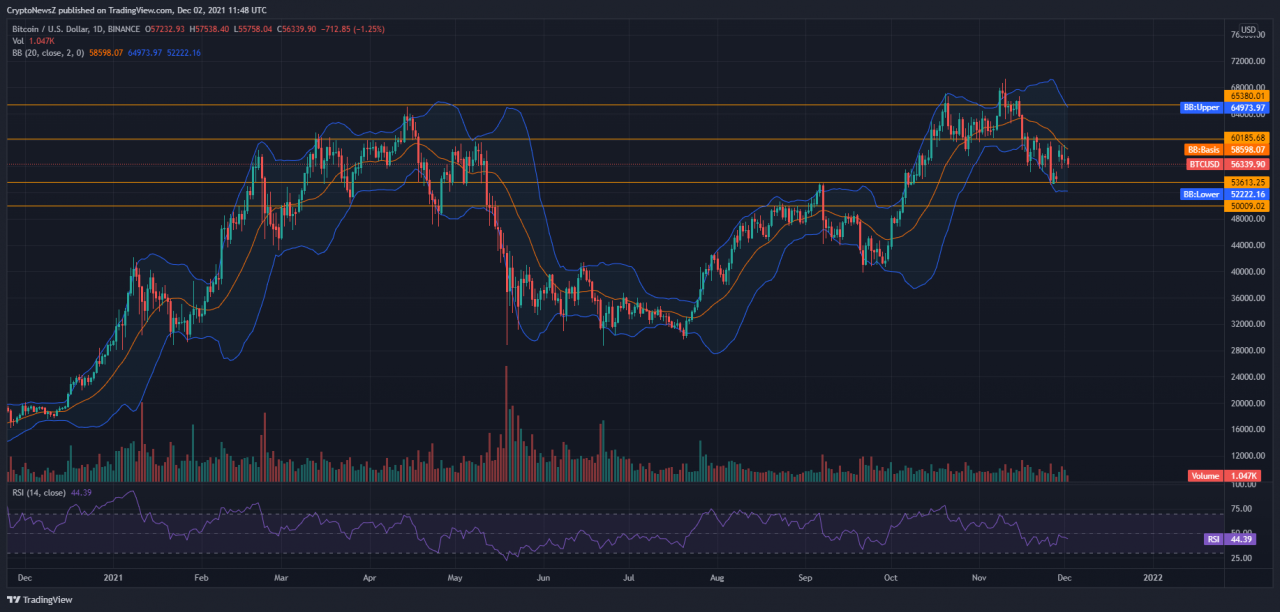
  • Relative Strength Index (RSI): The RSI measures the speed and change of price movements and ranges from 0 to 100. An RSI above 70 typically indicates that Bitcoin is overbought and may be due for a correction, whereas an RSI below 30 suggests it may be oversold.
  • Bollinger Bands: This volatility indicator consists of a middle band (SMA) and two outer bands that represent standard deviations from the SMA. When Bitcoin’s price approaches the upper band, it suggests overbought conditions, while proximity to the lower band indicates oversold conditions.
  • MACD (Moving Average Convergence Divergence): This trend-following momentum indicator shows the relationship between two moving averages of a security’s price. Traders watch for MACD line crossovers, which can signal potential buys or sells.

Chart Patterns in Bitcoin Trading

Chart patterns are graphical representations of price movements that can indicate potential future price actions. Recognizing these patterns can help traders make strategic decisions. Key chart patterns include:

  • Head and Shoulders: This reversal pattern indicates a change in trend, forming a peak (head) between two smaller peaks (shoulders). A confirmed head and shoulders pattern can signal the end of an uptrend.
  • Double Top and Double Bottom: A double top signals a potential reversal from bullish to bearish, occurring after an uptrend with two peaks at approximately the same level. Conversely, a double bottom indicates a potential reversal from bearish to bullish, forming two troughs at similar levels.
  • Triangles (Symmetrical, Ascending, Descending): Triangular formations suggest a period of consolidation before a breakout. An ascending triangle typically indicates bullish sentiment, while a descending triangle indicates a bearish outlook.
  • Flags and Pennants: These continuation patterns form after a strong price movement and indicate a brief consolidation before the trend continues. Flags are rectangular-shaped, while pennants are triangle-shaped.

Setting Up and Interpreting Support and Resistance Levels

Support and resistance levels are crucial concepts in technical analysis, acting as psychological barriers for traders. Support refers to a price level where buying interest is strong enough to overcome selling pressure, while resistance is where selling pressure surpasses buying interest. Understanding these levels can assist traders in forecasting potential price movements.To effectively set up and interpret these levels, consider the following:

  • Identifying Historical Levels: Look at historical price charts to identify points where the price has previously reversed direction. These areas can serve as future support or resistance levels.
  • Using Trendlines: Draw trendlines connecting the lows in an uptrend or the highs in a downtrend. These lines can act as dynamic support and resistance levels.
  • Fibonacci Retracement Levels: Utilize Fibonacci retracement levels to determine potential reversal points based on the mathematical ratios derived from the Fibonacci sequence. Common levels include 23.6%, 38.2%, 50%, 61.8%, and 100%.
  • Volume Profile: Analyze volume at various price levels to identify significant support and resistance zones. High trading volume at a given price level can indicate strong support or resistance.

Fundamental Analysis in Bitcoin Pricing

The fundamental analysis of Bitcoin pricing focuses on the underlying factors that influence its valuation. These factors include the dynamics of Bitcoin mining, the impact of regulatory developments, and the rates of adoption by both individuals and institutions. Understanding these elements provides a clearer picture of how Bitcoin’s price is shaped within the broader financial landscape.

Bitcoin Mining and Its Impact on Price Dynamics

Bitcoin mining plays a critical role in the cryptocurrency’s ecosystem. Mining is the process through which new Bitcoins are generated and transactions are verified on the blockchain. The supply of Bitcoin is capped at 21 million coins, creating a scarcity that can drive demand and influence price. The mining process involves solving complex mathematical problems, which requires significant computational power and energy consumption.As mining rewards halve approximately every four years during events known as “halving,” the rate at which new Bitcoins enter circulation decreases.

This reduction in new supply can lead to increased price volatility as market participants anticipate changes in availability. For instance, the halving event in May 2020 saw Bitcoin’s price surge from around $8,000 to over $60,000 within a year, highlighting the direct correlation between mining dynamics and price movements.

Regulatory News and Its Implications

Regulatory developments are significant influencers of Bitcoin prices. Government actions and legislation can create uncertainty or confidence in the market, affecting investor behavior. Positive regulatory news, such as the approval of Bitcoin ETFs (Exchange-Traded Funds) or favorable tax legislation, can lead to price rallies as institutional investors gain easier access to the asset.Conversely, negative regulatory actions—such as bans on cryptocurrency trading or stringent regulations—can lead to sharp sell-offs and declining prices.

For example, China’s crackdown on Bitcoin mining and trading in 2021 resulted in a drastic drop in Bitcoin’s value, erasing billions in market capitalization. Thus, staying informed about regulatory changes is crucial for understanding price movements in the Bitcoin market.

Adoption Rates Among Individuals and Institutions

The rate of adoption of Bitcoin by both individuals and institutions significantly impacts its valuation. Increased adoption leads to higher demand, which can drive prices up. Individuals embracing Bitcoin as a form of payment or investment contribute to a growing user base, while institutional adoption adds credibility and legitimacy to the asset.Key indicators of adoption include the number of active wallets, transaction volumes, and the integration of Bitcoin into financial services.

For instance, the entry of major companies like Tesla and Square into Bitcoin investment has reinforced its status as a digital asset, influencing both public perception and price. Furthermore, growing interest from traditional financial institutions to offer Bitcoin-related services demonstrates an expanding acceptance that can support long-term price growth.

“Bitcoin’s value is driven not just by speculative trading but by its fundamental utility as a decentralized currency and store of value.”

Sentiment Analysis and Its Effect on Bitcoin Prices

Social media sentiment plays a significant role in shaping the trading behavior of Bitcoin investors. As discussions around Bitcoin gain momentum on platforms like Twitter, Reddit, and Facebook, the collective mood of market participants can create immediate and powerful influences on prices. The emotional responses fueled by news events, market trends, and opinions shared online can lead to rapid buying or selling, often overriding traditional market fundamentals.Understanding social media sentiment can be critical for traders looking to anticipate market moves.

Sentiment analysis tools have emerged to help gauge the mood of the market based on online discussions and trends. These tools utilize algorithms to analyze large volumes of social media posts, news articles, and other digital content to deliver insights into prevailing market sentiments. Some popular sentiment analysis tools include:

Examples of Sentiment Analysis Tools

Several effective tools can be utilized to assess market sentiment surrounding Bitcoin. Each offers unique features that cater to different needs:

  • Twitter Sentiment Analysis Tools: Applications like sentiment140 and TweetSentiment enable users to analyze Twitter posts for positive, negative, or neutral sentiments regarding Bitcoin.
  • Google Trends: This tool allows users to explore the popularity of specific search terms related to Bitcoin over time, offering insights into public interest and sentiment shifts.
  • Social Media Analytics Platforms: Tools like LunarCrush and The Tie aggregate data from multiple social media channels to provide a comprehensive overview of Bitcoin sentiment and community engagement.

Interpreting news headlines is another crucial aspect of sentiment analysis. The way news is presented can significantly impact market perception and behavior. For example, headlines that emphasize regulatory crackdowns or security breaches often lead to negative sentiment and price drops. Conversely, positive news around institutional adoption or technological advancements can spark enthusiasm and drive prices upward.

Interpreting News Headlines

The impact of news headlines on Bitcoin prices can be profound, and understanding this relationship can help traders make informed decisions. Here are some key factors to consider:

  • Framing of News: The narrative surrounding a news event, whether optimistic or pessimistic, can sway investor sentiment. Positive framing tends to lead to bullish market responses.
  • Source Credibility: The reliability of the news source often affects how traders react. News from established financial institutions or reputable journalists tends to carry more weight than unverified sources.
  • Market Context: The current market environment also influences how news is perceived. For instance, during a bullish trend, even mildly positive news may lead to significant price increases.

By leveraging sentiment analysis tools and understanding the implications of news headlines, traders can better navigate the complexities of Bitcoin price movements, aligning their strategies with prevailing market moods.

Predictions from Experts and Market Analysts

The landscape of Bitcoin price predictions is rich with insights from various experts and analysts who utilize different methodologies to forecast future movements. These predictions can significantly influence market sentiment and investment decisions, making it essential to analyze their perspectives carefully.Leading analysts and financial institutions have provided a range of forecasts reflecting their views on Bitcoin’s potential trajectory. Some analysts adopt a bullish stance, citing strong market fundamentals and increasing institutional adoption, while others maintain a bearish outlook based on historical volatility and regulatory concerns.

Understanding these insights is crucial for anyone looking to navigate the ever-changing Bitcoin market.

Predictions from Leading Analysts

Several prominent analysts have shared their price predictions for Bitcoin, often supported by extensive research and analysis. Here are some notable forecasts:

  • PlanB: The creator of the Stock-to-Flow (S2F) model predicts Bitcoin could reach $100,000 by the end of 2023, asserting that historical patterns support this bullish outlook.
  • Tim Draper: The venture capitalist maintains a long-term price target of $250,000 for Bitcoin, projecting that mainstream adoption and integration into financial systems will drive prices higher.
  • JPMorgan Chase: Analysts at this leading financial institution have suggested that Bitcoin could reach between $50,000 and $100,000 in the next few years, driven by its adoption as a digital gold substitute.

Insights from Major Financial Institutions

Major financial institutions have increasingly recognized Bitcoin’s growing role in global finance, leading to various forecasts reflecting their insights:

  • Goldman Sachs: Analysts recently indicated a potential price trajectory for Bitcoin between $60,000 and $75,000, citing increasing institutional interest as a driving factor.
  • Bank of America: They predict volatility but suggest that Bitcoin’s resilience could lead to a price rebound, estimating a return to previous highs in the near future.
  • Citibank: Their analysis hints at a long-term target of $300,000 by 2025, arguing that Bitcoin’s supply constraints and increasing demand will underpin significant price growth.

Bullish and Bearish Opinions from the Cryptocurrency Community

The cryptocurrency community often exhibits diverse opinions, leading to both bullish and bearish sentiments regarding Bitcoin’s price. These perspectives can be a reflection of market psychology and trends.

  • Bullish Opinions: Proponents argue that Bitcoin’s network effects, limited supply, and increasing global adoption will drive prices significantly higher. Many enthusiasts believe that Bitcoin is on the verge of a new bull market, similar to previous cycles.
  • Bearish Opinions: Skeptics often point to Bitcoin’s price volatility, regulatory uncertainties, and past market corrections as reasons for caution. Some analysts warn that without sustained adoption, Bitcoin could face significant downturns.

“Bitcoin is like a new digital gold, and its value could soar as it becomes a mainstream asset.”

Historical Comparison with Other Cryptocurrencies

Bitcoin Price Prediction: Surge to ,600 Amid ETF Launches, Is ...

Over the past five years, Bitcoin has maintained its position as the leading cryptocurrency, significantly influencing the entire market. This period has witnessed rapid developments, including the emergence of various altcoins, each vying for a share of investor attention. By comparing Bitcoin’s price trends with those of major altcoins, we can gain insights into market dynamics and correlations that impact cryptocurrency valuations.Bitcoin’s correlation with other cryptocurrencies, especially major altcoins like Ethereum (ETH), Ripple (XRP), and Litecoin (LTC), has been a focal point for traders and investors.

Many altcoins tend to follow Bitcoin’s price movements, often referred to as a “rising tide lifts all boats.” Analyzing these relationships helps in understanding the broader market sentiments and investment strategies.

Price Trends of Bitcoin and Major Altcoins

The following table illustrates the price performance of Bitcoin alongside selected altcoins over the past five years (2018-2023), highlighting their percentage changes and volatility:

Cryptocurrency Price Change (%) Volatility (Standard Deviation)
Bitcoin (BTC) +400% 12.5%
Ethereum (ETH) +900% 18.3%
Ripple (XRP) -30% 25.7%
Litecoin (LTC) +300% 15.1%

The table showcases Bitcoin’s price change of +400%, a robust performance that underscores its resilience as a digital asset. In contrast, Ethereum has experienced an impressive +900% increase, reflecting its unique position in the market with smart contract capabilities. Ripple, however, faced challenges, evidenced by its -30% change, which highlights the volatility that can accompany regulatory issues and market sentiment shifts.

“Bitcoin often serves as a barometer for the entire cryptocurrency market, influencing altcoin prices with its movements.”

The differences in volatility among these cryptocurrencies also shed light on their market behavior. Bitcoin’s relatively lower volatility (12.5%) compared to Ethereum (18.3%) and Ripple (25.7%) indicates a more stable investment, which can be attractive to risk-averse investors. Understanding these correlations and trends aids in making informed decisions in cryptocurrency investing.

Impact of Technological Developments on Bitcoin Prices

Technological advancements in blockchain and related technologies play a crucial role in shaping the market dynamics of Bitcoin. As these innovations emerge, they can significantly influence Bitcoin’s market price, creating both opportunities and challenges for investors. Understanding the interplay between technology and market valuation helps investors anticipate potential shifts in Bitcoin’s price trajectory.

Advancements in Blockchain Technology

The evolution of blockchain technology directly impacts Bitcoin’s price by enhancing its scalability, security, and usability. Innovations such as the Lightning Network have emerged to facilitate faster transactions and lower fees, making Bitcoin more appealing for everyday use. Key benefits of these advancements include:

  • Increased Transaction Speed: By processing transactions off-chain, the Lightning Network allows for nearly instant transactions, which can attract more users and investors.
  • Lower Transaction Costs: Reducing fees can make Bitcoin more competitive against traditional payment methods, thus driving demand.
  • Enhanced Security: Improvements in cryptographic techniques can increase trust in Bitcoin’s network, potentially leading to higher adoption rates.

The connection between technological improvements and Bitcoin’s market price is clear; as enhancements make Bitcoin more efficient and user-friendly, the demand and consequently the price may increase.

Scaling Solutions and Their Effects

Scaling solutions address the limitations of Bitcoin’s current transaction capacity. By implementing these solutions, Bitcoin can handle a larger volume of transactions without congestion, which is critical for maintaining its position as a leading cryptocurrency.Some notable scaling solutions include:

  • Segregated Witness (SegWit): This upgrade separates transaction signatures from the transaction data, allowing more transactions to fit into each block, thereby increasing throughput.
  • Layer 2 Solutions: Technologies like the Lightning Network enable off-chain transactions, alleviating strain on the main blockchain and promoting greater usage.

These scaling solutions can lead to increased network activity and investor interest, ultimately affecting Bitcoin’s price positively.

Significance of Bitcoin Forks

Bitcoin forks occur when the blockchain undergoes a split, leading to the creation of a new currency. Forks can have significant implications for Bitcoin’s market value, often leading to price volatility.Historically, key forks have resulted in:

  • Market Confusion: Forks can create uncertainty among investors as they assess the implications for Bitcoin and its newly created alternatives, potentially leading to price swings.
  • Market Segmentation: The emergence of forks often attracts a portion of the investor base, which may dilute demand for Bitcoin itself.
  • Short-term Price Surge: In many instances, the announcement of a fork has led to a speculative price increase as traders anticipate a potential profit from the resulting cryptocurrencies.

Overall, Bitcoin forks illustrate the volatility associated with technological changes in the cryptocurrency space. They can act as catalysts for both rapid price increases and sharp declines, highlighting the intricate relationship between technological developments and market valuation.

Future Trends and Predictions for Bitcoin

As Bitcoin continues to evolve, understanding its potential future trends and predictions is essential for investors and enthusiasts alike. The dynamics of its market are influenced by various factors, including technological advancements, institutional interest, and macroeconomic conditions. Here, we will explore some future use cases of Bitcoin, the impact of institutional investments, and its potential role as a hedge against economic downturns.

Potential Use Cases of Bitcoin Driving Its Price

Bitcoin’s utility extends beyond a mere store of value; it has a variety of potential use cases that could significantly influence its price in the future. These use cases include:

  • Remittances and Cross-Border Transactions: Bitcoin can offer a faster and cheaper alternative for remittances, facilitating international transactions with lower fees compared to traditional banking systems.
  • Decentralized Finance (DeFi) Applications: The rise of DeFi platforms allows Bitcoin holders to participate in lending, staking, and earning interest, increasing demand and usage scenarios.
  • Smart Contracts: Future implementations of Bitcoin’s scripting capabilities could enable complex smart contracts, expanding its application in various sectors such as real estate and legal agreements.

These advancements could bolster Bitcoin’s adoption and subsequently drive its price upward as more users recognize its practical benefits.

Implications of Institutional Investment Trends

Institutional investment has emerged as a significant factor influencing Bitcoin’s market price. The entry of institutional players like hedge funds, corporations, and pension funds indicates growing acceptance of Bitcoin as a legitimate asset class. The implications of these investment trends are profound:

  • Increased Liquidity: Institutional investments typically involve larger amounts of capital, which can enhance market liquidity and reduce volatility, creating a more stable price environment.
  • Price Appreciation: As institutional investors accumulate Bitcoin, the scarcity of supply coupled with increased demand can drive prices higher, further legitimizing Bitcoin’s value proposition.
  • Market Sentiment Shift: Institutional participation can improve public perception of Bitcoin, attracting retail investors and potentially leading to a positive feedback loop of demand and price increases.

These factors underline the critical role that institutional investment plays in shaping the future value of Bitcoin.

Bitcoin as a Hedge Against Economic Downturns

In uncertain economic climates, Bitcoin is increasingly viewed as a potential hedge against financial instability. Its decentralized nature and limited supply create unique properties that can appeal to investors during economic downturns.Factors that support this view include:

  • Inflation Resistance: Bitcoin’s capped supply of 21 million coins means it cannot be devalued through inflationary policies, making it an attractive option for preserving wealth when fiat currencies lose purchasing power.
  • Decentralization: Unlike traditional assets reliant on government stability or central bank policies, Bitcoin operates on a decentralized network that can provide safety during economic crises.
  • Historical Performance: Instances during which Bitcoin has retained or increased its value amidst global economic turmoil, such as in 2020 during the onset of the COVID-19 pandemic, offer empirical evidence of its potential as a reliable hedge.

These characteristics position Bitcoin as a noteworthy asset during economic uncertainty, potentially influencing its future price trajectory positively.

Final Review

In summary, the journey through Bitcoin price prediction reveals a multifaceted landscape that is continuously evolving. By grasping the interplay of market trends, technological innovations, and expert insights, investors can better position themselves for potential opportunities and challenges ahead. As Bitcoin continues to capture the imagination of traders and institutions, staying informed will be key to navigating its future.

Key Questions Answered

What factors influence Bitcoin’s price?

Factors include market demand, regulatory news, investor sentiment, and global economic conditions.

How often does Bitcoin’s price fluctuate?

Bitcoin’s price can fluctuate significantly within minutes due to market volatility.

What are common technical indicators for Bitcoin?

Popular indicators include Moving Averages, Relative Strength Index (RSI), and Bollinger Bands.

Can Bitcoin be used as an inflation hedge?

Many view Bitcoin as a digital gold and a potential hedge against inflation due to its limited supply.

How does social media affect Bitcoin price?

Social media sentiment can drive trading behavior, influencing price movements based on public perception and news.