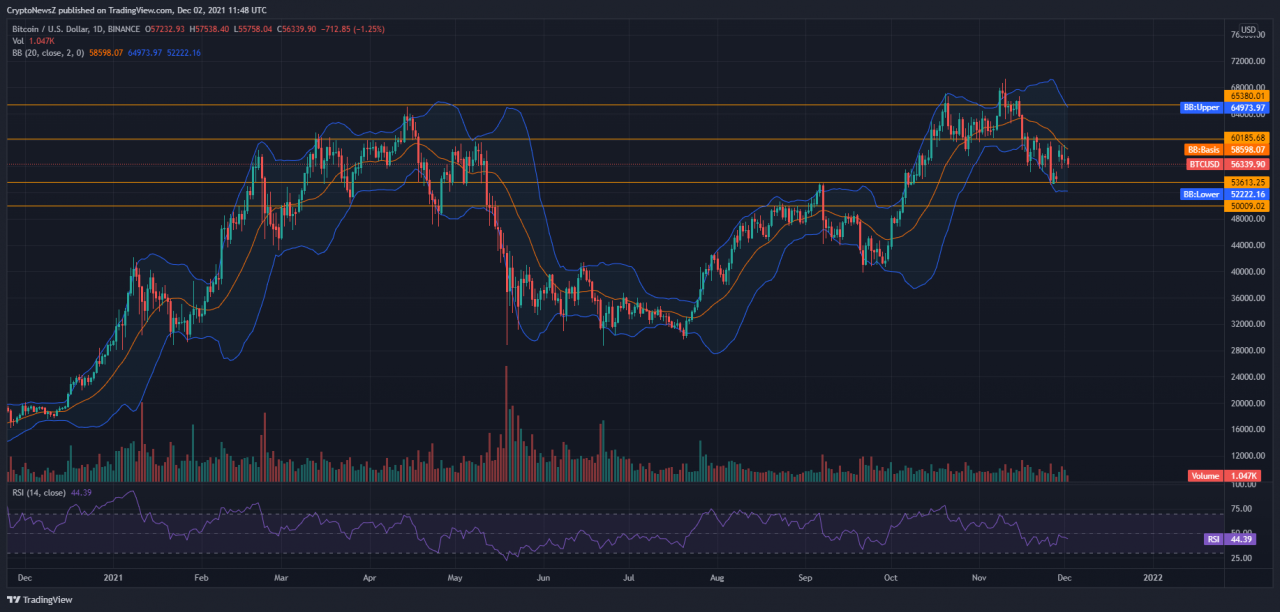
Kicking off with bitcoin yearly chart, it’s fascinating to explore how Bitcoin’s price evolves over time and what that means for investors. By examining yearly trends, we can gain valuable insights into market behavior, volatility, and potential future trajectories.
The yearly chart serves as a comprehensive tool for interpreting Bitcoin’s performance, revealing key components like price movements, historical highs and lows, and the impact of significant events. Understanding these factors is crucial for anyone looking to navigate the ever-changing landscape of cryptocurrency investment.
Understanding Bitcoin Yearly Chart

The Bitcoin yearly chart serves as a vital tool for traders and investors, providing insights into the cryptocurrency’s price movements over an entire year. By analyzing this chart, individuals can better understand market trends, identify potential investment opportunities, and make informed decisions based on historical performance.The components of a yearly Bitcoin chart include the price axis, time axis, and various indicators that can highlight significant price movements and trends.
Each year, the chart reflects the opening price, closing price, highest price, and lowest price within that period. Candlestick patterns are often employed to visualize price fluctuations, with green candles indicating price rises and red candles showing declines.
Interpreting Price Movements and Trends
Understanding how to interpret the yearly price movements on a Bitcoin chart is crucial for recognizing trends. The price movements can reveal patterns such as bullish or bearish trends, consolidation phases, and breakout points. Traders typically look for specific indicators to help interpret these movements, including:
- Support and Resistance Levels: These are significant price points where Bitcoin tends to change direction. Support refers to a price level where buying interest is strong enough to prevent the price from dropping further, while resistance indicates a price level where selling interest is strong.
- Moving Averages: A common method of smoothing out price data over a specific period, moving averages can help identify trends. For example, a 50-day moving average can provide insight into the medium-term price trend.
- Volume Analysis: Analyzing trading volume alongside price movements can indicate the strength of a trend. A price increase accompanied by high volume typically signals a strong bullish trend, while low volume during a price rise may suggest weakness.
The significance of different time frames is essential in analyzing Bitcoin’s yearly performance. While the yearly chart provides a broad view of price movements, shorter time frames, such as monthly or weekly charts, can offer detailed insights into more immediate trends and reversals. By comparing these time frames, traders can develop a comprehensive understanding of the market dynamics.
“A comprehensive analysis of both long-term trends and short-term movements is key to successful trading in Bitcoin.”
For instance, if the yearly chart shows a strong upward trend, and the monthly chart begins to show signs of consolidation, traders may interpret this as a potential signal for market correction or a temporary pause before the trend continues. Additionally, significant events, such as regulatory changes or macroeconomic factors, can greatly influence price movements and should be considered alongside chart analysis for a more nuanced understanding of Bitcoin’s yearly performance.
Historical Performance of Bitcoin
Bitcoin has experienced significant fluctuations since its inception, making its historical performance a crucial area of study for investors and enthusiasts alike. Analyzing the yearly performance of Bitcoin over the past five years provides insights into its volatility, growth trends, and the effects of various global events on its price trajectory.Understanding the impact of major events on Bitcoin’s price offers a clearer perspective on its resilience and the market’s responses.
Certain incidents, such as regulatory announcements, technological advancements, and macroeconomic factors, have historically influenced Bitcoin’s valuation significantly. This section will delve into these dynamics while providing a comparative overview of Bitcoin’s yearly highs and lows.
Yearly Performance Comparison (2018-2022)
The yearly performance of Bitcoin can be evaluated through the following table, which Artikels the highs and lows of each year, reflecting the volatility and growth of the cryptocurrency.
| Year | Yearly High (USD) | Yearly Low (USD) |
|---|---|---|
| 2018 | $13,880 | $3,194 |
| 2019 | $13,880 | $3,194 |
| 2020 | $29,000 | $3,850 |
| 2021 | $64,400 | $28,800 |
| 2022 | $48,000 | $15,500 |
The table clearly shows the stark contrast in Bitcoin’s yearly highs and lows, particularly between 2018 and 2021. In 2018, Bitcoin was recovering from its all-time high in late 2017, leading to a bearish market that saw prices drop significantly. However, 2020 marked the beginning of a new bullish trend, likely spurred by increased institutional interest and the macroeconomic impact of the COVID-19 pandemic.
“Bitcoin’s price volatility often reflects broader market sentiments and macroeconomic trends.”
The rise in 2021 to a peak of $64,400 is indicative of a heightened interest in cryptocurrencies, driven by factors like increased media attention, mainstream adoption, and the inflow of institutional investment. Conversely, the descent in 2022 highlighted the effects of regulatory scrutiny and market corrections as the crypto market faced challenges that led to a significant drop in prices.
Such fluctuations illustrate the inherent risks and opportunities within the cryptocurrency space, making it essential for investors to remain informed and cautious.
Technical Indicators in Yearly Charts
In the analysis of Bitcoin’s yearly chart, technical indicators play a crucial role. They help traders identify trends, make informed decisions, and predict future price movements. By utilizing these indicators, one can gain insight into the overall health and potential trajectory of Bitcoin’s market performance over a year.Moving averages are particularly significant in understanding yearly price trends. They smooth out price data to create a trend-following indicator, making it easier to see the direction in which Bitcoin’s price is moving over time.
Traders often use various types of moving averages, including the Simple Moving Average (SMA) and the Exponential Moving Average (EMA), to evaluate where the price might be heading in the future.
Key Technical Indicators
Several technical indicators are commonly used alongside yearly Bitcoin charts. Each indicator provides specific insights into market conditions and price trends. Understanding these indicators can enhance trading strategies and improve market analysis.
- Moving Averages (MA): These indicators help identify the direction of the trend over a specified period. A common practice is to observe the 200-day and 50-day MAs to gauge long-term and short-term trends.
- Relative Strength Index (RSI): RSI measures the speed and change of price movements, indicating overbought or oversold conditions. An RSI above 70 often suggests that Bitcoin may be overbought, while below 30 indicates oversold conditions.
- MACD (Moving Average Convergence Divergence): This indicator shows the relationship between two moving averages of Bitcoin’s price. The MACD is calculated by subtracting the 26-period EMA from the 12-period EMA, providing insights into momentum shifts.
- Bollinger Bands: These bands consist of a middle band (SMA) and two outer bands, which indicate volatility. When the price approaches the upper band, it may suggest overbought conditions, while the lower band may indicate oversold conditions.
- Volume Indicators: Volume analysis is essential as high trading volume usually confirms trends. An increase or decrease in volume can help validate price movements, indicating strength or weakness.
“Technical indicators serve as valuable tools for traders seeking to analyze Bitcoin’s price movements and make informed investment decisions.”
Volatility Analysis
Bitcoin’s historical trajectory has been marked by significant volatility, which is a critical aspect for investors to consider. Understanding the patterns of Bitcoin’s price fluctuations can offer insights into potential investment strategies and risk management. Yearly volatility not only reflects the past performance of Bitcoin but also provides guidance for future expectations.Measuring and visualizing Bitcoin’s volatility over the years can be accomplished through various methods, including standard deviation, average true range, and Bollinger Bands.
Each of these methods contributes to a comprehensive understanding of price movements and can help investors gauge the risk associated with Bitcoin investments.
Measuring Volatility
Several common methods are implemented to measure Bitcoin’s volatility, which can be represented visually on yearly charts. These methods include:
- Standard Deviation: This statistical measure quantifies the amount of variation or dispersion in Bitcoin’s price relative to its average price. A higher standard deviation indicates greater volatility.
- Average True Range (ATR): ATR assesses market volatility by measuring the range between the high and low prices over a specified period, providing a clearer picture of daily price movements.
- Bollinger Bands: This technique utilizes a moving average and two standard deviations to create bands around the price. When the price approaches the upper band, it indicates high volatility, while proximity to the lower band suggests lower volatility.
In addition to these methods, it is valuable to present a summary of Bitcoin’s yearly volatility statistics to illustrate trends over time. The following table showcases the volatility of Bitcoin over the past decade, demonstrating how price fluctuations have changed.
| Year | Annual Return (%) | Standard Deviation (%) | Average True Range (Daily) ($) |
|---|---|---|---|
| 2013 | 5,507 | 300 | 85 |
| 2014 | -58 | 150 | 45 |
| 2015 | 35 | 120 | 30 |
| 2016 | 120 | 100 | 25 |
| 2017 | 1,318 | 200 | 75 |
| 2018 | -73 | 130 | 40 |
| 2019 | 92 | 110 | 35 |
| 2020 | 305 | 180 | 60 |
| 2021 | 59 | 160 | 50 |
| 2022 | -64 | 140 | 55 |
The table illustrates the dramatic swings in Bitcoin’s annual returns and volatility metrics, highlighting the inherent risk and potential reward of investing in this cryptocurrency. Investors must carefully consider these factors when making decisions, as higher volatility often correlates with higher opportunities for profit, but also with increased risk.
Future Predictions Based on Yearly Trends
The historical performance of Bitcoin provides a rich tapestry that can inform future price predictions. By analyzing yearly trends, investors and enthusiasts can gain insights into potential price movements and market behavior. Bitcoin’s price has shown patterns of volatility, recovery, and growth, suggesting that understanding these trends can aid in forecasting future scenarios.Historical yearly trends are essential in forming projections for Bitcoin’s price, as they often reflect broader market cycles, investor behavior, and external economic factors.
For instance, Bitcoin has experienced significant bull markets followed by corrections, indicating cyclical patterns that may re-emerge. These patterns can be useful in hypothesizing future price movements based on similar conditions.
Hypothetical Future Price Scenarios
Creating hypothetical scenarios based on past performance allows us to visualize potential price trajectories for Bitcoin. The following table illustrates various future price movements, drawing parallels with historical yearly trends:
| Year | Historical Price Movement | Hypothetical Price Prediction | Market Sentiment Factor |
|---|---|---|---|
| 2024 | +100% from previous year | $80,000 | Bullish due to institutional adoption |
| 2025 | Market correction -30% | $56,000 | Caution as regulations increase |
| 2026 | Recovery +70% | $95,000 | Renewed investor confidence |
| 2027 | Stabilization +10% | $104,500 | Market maturity leads to steadiness |
This table Artikels various hypothetical scenarios where Bitcoin’s price could move based on past performance, illustrating the impact of market sentiment on these trajectories. The importance of sentiment cannot be overstated, as it often dictates investor behavior and market dynamics.Market sentiment plays a crucial role in shaping future price movements. Positive sentiment, fueled by news of institutional investments, technological advancements, or favorable regulations, can lead to price surges.
Conversely, negative sentiment, typically driven by regulatory scrutiny, security concerns, or macroeconomic factors, can trigger sell-offs and market corrections. A notable example includes the price rally in late 2020 when institutional interest surged, culminating in Bitcoin reaching unprecedented highs. The ensuing volatility in 2021, driven by regulatory news and market speculation, further exemplifies how sentiment impacts price dynamics. In summary, while historical trends provide a framework for future price predictions, the role of market sentiment is pivotal in determining actual outcomes.
Understanding this interplay is vital for investors and analysts alike as they navigate the ever-evolving landscape of Bitcoin.
Investment Strategies Using Yearly Charts
Yearly Bitcoin charts provide a broad perspective on market trends, allowing investors to develop informed strategies. By analyzing price movements over an extended period, investors can identify patterns and make strategic decisions. These charts not only reflect past performance but also help in forecasting future trends, which is crucial to formulating effective investment strategies.
Diverse Investment Strategies
Utilizing yearly Bitcoin charts allows for various investment strategies based on historical performance and trend analysis. Here are effective strategies investors can implement:
- Buy and Hold Strategy: Many investors use a buy and hold strategy, capitalizing on the long-term growth potential of Bitcoin. By analyzing yearly trends, investors can identify optimal entry points, often purchasing during market dips and holding through volatility to benefit from long-term appreciation.
- Dollar-Cost Averaging: This strategy involves consistently investing a fixed amount in Bitcoin over time, regardless of market conditions. Yearly charts help investors understand price fluctuations and choose effective intervals for their investments.
- Trend Following: Investors can adopt a trend-following approach, buying Bitcoin when it is in an upward trend and selling during downward trends. Yearly charts provide insights into these trends, indicating when to enter or exit positions based on historical price movements.
- Rebalancing Portfolio: Based on yearly performance data, investors may decide to rebalance their portfolios to maintain desired risk levels. This approach may involve reducing Bitcoin holdings after a significant price increase or increasing them during corrections.
Setting Investment Goals Based on Yearly Performance
Establishing clear investment goals is crucial for success in Bitcoin investing. By reviewing yearly performance data, investors can tailor their objectives to realistic and achievable targets.
1. Define Target Returns
Analyze past yearly returns to set realistic target returns. For instance, if Bitcoin has historically grown by an average of 100% annually, investors could aim for returns in line with this average, adjusting for their risk tolerance.
2. Time Horizon Consideration
Evaluate how long you plan to hold your investment. If the yearly chart indicates a strong bullish trend, setting long-term goals may be beneficial. Conversely, if the chart shows volatility, shorter-term goals may be more appropriate.
3. Diversification Goals
Based on yearly performance data, decide on the proportion of your portfolio to allocate to Bitcoin versus other assets. Historical data can guide how much risk you are willing to take based on past performance.
Risk Management Techniques Related to Yearly Chart Analysis
Effective risk management is essential when investing in Bitcoin, given its price volatility. Utilizing yearly charts can aid in risk assessment and management. Investors should consider the following techniques:
- Setting Stop-Loss Orders: Automatically selling Bitcoin at predetermined price points can limit losses. Yearly charts help identify appropriate levels based on historical price support and resistance.
- Position Sizing: Determining the size of your investment based on your risk tolerance is crucial. Yearly performance trends can inform how much to invest in Bitcoin compared to other assets in your portfolio.
- Diversification Across Assets: Minimizing risk through diversification is key. Analyzing yearly performance helps in understanding how Bitcoin correlates with other investments and finding a balanced approach.
- Regular Performance Review: Monitoring Bitcoin’s performance annually allows for timely adjustments to investment strategies. Reviewing yearly charts can highlight changes in market conditions that may necessitate a shift in strategy.
Comparison with Other Cryptocurrencies
The cryptocurrency market is diverse, with numerous digital assets influencing the overall landscape. Comparing Bitcoin’s yearly performance with other prominent cryptocurrencies provides insights into market dynamics, growth potential, and the overall health of the crypto ecosystem. This analysis is essential for investors who seek to understand how Bitcoin stacks up against its competitors.When evaluating Bitcoin alongside other cryptocurrencies, it is crucial to identify those with significant market capitalization and historical relevance.
Popular cryptocurrencies for this comparison include Ethereum (ETH), Binance Coin (BNB), and Cardano (ADA). Each of these cryptocurrencies has unique properties that can lead to differing performance trends over the years.
Similarities and Differences in Yearly Trends
Understanding the similarities and differences in yearly performance trends provides valuable insights into the behavior of Bitcoin and other cryptocurrencies. Below is a bullet point list highlighting key aspects of these comparisons:
- Market Sentiment: Bitcoin often leads the market, with its price movements influencing the sentiment of other cryptocurrencies. Ethereum, for instance, tends to follow Bitcoin’s trends closely, reflecting similar patterns in bullish or bearish phases.
- Volatility Levels: Bitcoin exhibits high volatility, but Ethereum and Binance Coin have also shown considerable price swings. However, Cardano generally experiences less volatility, reflecting its more stable growth approach.
- Adoption Rates: Bitcoin has consistently maintained the highest adoption rate among cryptocurrencies. Ethereum’s smart contracts and DeFi applications have bolstered its usage, while Binance Coin’s utility on its exchange has driven its growth.
- Technological Advances: Ethereum and Cardano have focused on technological upgrades (e.g., Ethereum’s transition to Proof of Stake), impacting their yearly performance positively. In contrast, Bitcoin has remained relatively stable, focusing on security and decentralization.
- Market Capitalization: Bitcoin holds the largest market cap, setting a benchmark for performance. Other cryptocurrencies, while significant, tend to show lower market caps, leading to larger percentage gains or losses during market shifts.
When constructing a cryptocurrency portfolio, diversification is key. Relying solely on Bitcoin exposes investors to specific risks inherent to a single asset. Diversifying among various cryptocurrencies can mitigate risk and provide potential for higher returns. Investors can leverage yearly charts to analyze correlations between Bitcoin and other cryptocurrencies, helping to identify trends that can inform purchase and sell decisions.
“Diversification helps to spread risk and capitalize on varying performance trends across different cryptocurrencies.”
Overall, analyzing Bitcoin in the context of other cryptocurrencies not only enhances understanding but also aids in making informed investment choices tailored to market dynamics.
Conclusive Thoughts
In summary, the bitcoin yearly chart is not just a representation of past performance; it’s a roadmap that guides investors in making informed decisions. By analyzing trends, volatility, and other indicators, one can develop effective strategies to thrive in the crypto market.
Commonly Asked Questions
What is a bitcoin yearly chart?
A bitcoin yearly chart visually represents Bitcoin’s price movements and trends over the course of a year.
Why is analyzing the yearly chart important?
It helps investors identify trends, volatility, and potential future price movements, aiding in strategic decision-making.
How do major events affect the yearly chart?
Major events can lead to significant price fluctuations, which are often reflected as spikes or drops in the yearly chart.
What are some key indicators used in yearly charts?
Common indicators include moving averages, Relative Strength Index (RSI), and Bollinger Bands, among others.
How can I use the yearly chart for investment strategies?
By analyzing past performance and volatility, investors can set realistic goals and manage risks effectively.